
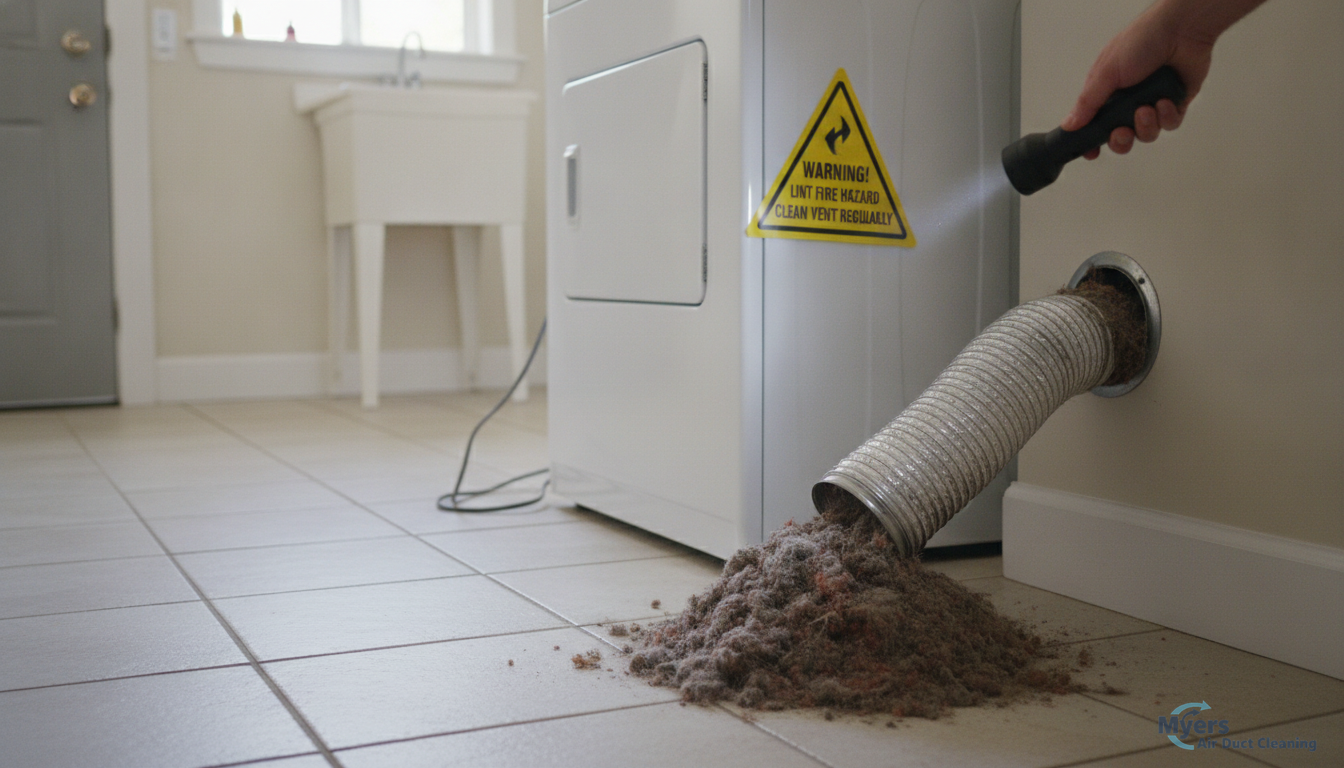
The Hidden Fire Hazard in Your Laundry Room
Most Austin homeowners think about fire safety in obvious terms — smoke detectors, fire extinguishers, keeping flammable materials away from the stove. What rarely gets attention is the dryer vent tucked behind your clothes dryer, quietly accumulating one of the most flammable materials in your home: lint. According to the U.S. Fire Administration, clothes dryers are responsible for approximately 2,900 residential fires each year in the United States, resulting in millions of dollars in property damage. The leading cause in the overwhelming majority of those fires is failure to clean the dryer vent.
In Austin, the risk is compounded by the city's construction boom. New subdivisions in areas like Mueller and expanding neighborhoods throughout Travis County often feature homes with longer, more complex dryer vent runs — multiple elbows, extended lengths, and in some cases roof exits — that trap lint far more aggressively than a simple straight-shot vent run ever would.
How Lint Buildup Becomes a Fire Risk
Lint is a byproduct of drying — tiny fibers shed from clothing, towels, and bedding that are light enough to travel with the hot exhaust air moving through your dryer vent. Your lint trap captures the majority of it, but a meaningful percentage bypasses the trap and travels into the vent duct itself. Over months and years, that lint accumulates on the interior walls of the vent, reducing the diameter of the exhaust pathway and slowing airflow.
As airflow decreases, the dryer's internal temperature rises. The heating element runs longer and hotter to compensate for the reduced airflow, and the lint coating the interior of the vent — which has a combustion temperature similar to paper — can ignite. Because dryer vent fires start inside the wall or in an attic space, they often spread significantly before being detected.
- Lint ignites at temperatures your dryer regularly reaches when the vent is clogged
- Fires that start inside duct runs in wall cavities or attics spread quickly before visible smoke appears indoors
- Foil accordion-style transition hoses — still common in older Austin homes — trap lint at every fold and crush point
- Roof-exit vents in some Austin homes are prone to bird nest blockages that create the same restricted-flow risk as lint buildup
Warning Signs Your Dryer Vent Needs Cleaning Now
Your dryer will usually give you clear signals that its vent is becoming clogged before a dangerous situation develops. Don't ignore these indicators:
- Clothes aren't dry after a full cycle. If you're running the dryer twice to get a load fully dry, restricted airflow is almost certainly the reason.
- The dryer cabinet is unusually hot. A properly vented dryer exhausts heat efficiently. If the top or sides of the unit are hot to the touch, heat is backing up inside.
- A burning or musty smell during operation. Any unusual odor from a running dryer is a sign that something is overheating or that biological growth has established itself in a damp, lint-clogged vent.
- The laundry room itself feels hot and humid. Exhaust air that can't exit through a clogged vent has to go somewhere — and it often back-pressures into the room.
- The exterior vent flap doesn't open during operation. A clear exhaust path creates enough pressure to push the exterior hood flap open. If it stays closed or barely moves, the vent is significantly restricted.
If you're experiencing any of these signs in your South Congress bungalow, your Tarrytown estate, or anywhere else in Austin, don't delay — contact Myers Air Duct Cleaning at +1 (737) 339-8886 to schedule service.
What Professional Dryer Vent Cleaning Involves
A professional dryer vent cleaning from Myers Air Duct Cleaning is a comprehensive service, not just a quick brush through the transition hose. Our technicians pull the dryer away from the wall to access and inspect the transition hose — the flexible section between the dryer and the wall — and check it for kinks, tears, and crush damage. Foil accordion-style hoses that are prone to lint accumulation are flagged for replacement, and we carry smooth-bore aluminum elbows to swap them on the spot when needed.
From there, our flexible rotary brush system is fed through the entire vent run — from the wall connection all the way to the exterior termination cap. The spinning brush head breaks apart compacted lint while high-velocity air flushes the debris out. We also inspect and clean the exterior hood, remove any bird nests or debris blocking the flap, and confirm that the flap opens and closes freely after service.
How Often Should Austin Homeowners Clean Their Dryer Vents?
The National Fire Protection Association recommends having your dryer vent cleaned at least once a year by a professional. For households that do larger laundry volumes — families with children, homes that use the dryer daily, or those laundering pet bedding frequently — twice-yearly service may be appropriate. Homes in Rollingwood and Hyde Park with longer vent runs or multiple-story configurations should be especially diligent about annual cleanings.
Pairing your annual dryer vent cleaning with a full air duct cleaning is a smart way to address all of your home's ventilation maintenance in a single visit. Many Austin homeowners schedule both services together to save time and ensure their entire HVAC and exhaust ventilation system is in top condition heading into Austin's long cooling season.
Book Your Dryer Vent Cleaning in Austin Today
Myers Air Duct Cleaning serves homeowners throughout Austin and Travis County seven days a week, 8:00 AM to 6:00 PM. Whether you're in Mueller, South Congress, Tarrytown, or anywhere in between, our team can typically schedule service within the same week. Don't wait for warning signs to become a fire emergency.
Call +1 (737) 339-8886 or email [email protected] to book your dryer vent cleaning. And while you're at it, ask about our HVAC register and grille cleaning and air duct sanitizing services to complete your home's indoor air quality maintenance in one convenient visit.
Learn more about our full ventilation services, including air duct cleaning in Travis County and dryer vent cleaning throughout Travis County, at myersairductcleaning.com.
Need Service?
Call +17373398886 or fill out our online form for a free, no-obligation quote.
Request Free Quote